
Project Information
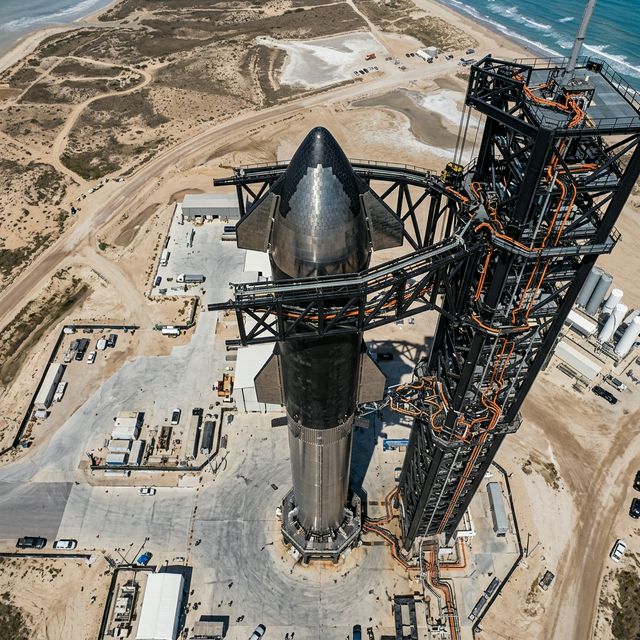
SpaceX Starship
Launch Vehicle
A fully reusable heavy lift launch vehicle designed to support large satellite deployments, orbital infrastructure construction, and future human missions to deep space. High payload capacity, methane-based propulsion, and a fully reusable flight architecture enable frequent and cost-efficient access to orbit.
Key Vehicle Metrics
Vehicle Architecture
The Starship launch system consists of two fully reusable stages working together to deliver large payloads to orbit and support deep-space missions.
First Stage
Super Heavy Booster
The booster stage provides the thrust necessary to lift the system off the launch pad and accelerate the spacecraft toward orbital velocity. Following stage separation, the booster is designed to return to Earth for recovery and reuse.
- Height of approximately 69 metres
- 33 Raptor methane engines
- Methane & liquid oxygen propellant (Methalox)
- Approximately 74 meganewtons of thrust at liftoff
Second Stage
Starship Spacecraft
The Starship spacecraft serves as the orbital vehicle responsible for payload deployment and long-distance mission capability. A large pressurised cargo compartment (~1,000 m³) enables transport of satellites, mission cargo, and future space infrastructure components.
- Height of approximately 50 metres
- Six Raptor engines (3 sea-level + 3 vacuum-optimised)
- 100–150 metric ton payload to Low Earth Orbit
- Accommodates up to 100 crew for long-duration missions
Mission Capability
Designed to support a wide range of mission types across commercial, governmental, and deep-space exploration categories.